Ken White
From the College of William & Mary in Williamsburg, Virginia. This is Leadership & Business. The weekly podcast that brings you the latest and best thinking from today's business leaders from across the world. We share the strategies, tactics, and information that can make you a more effective leader, communicator, and professional. I'm your host Ken White. Thanks for listening. Communication it's a critically important element of leadership. It's also one of the most challenging for CEOs, even in small, tightly-knit companies where everyone seems to be on the same page. It can be difficult to create a positive culture where quality communication is expected and practiced, and if communication wasn't tough enough. Imagine being a CEO in a country and in a culture other than your own. Tim Murray knows all about that. Born, raised, and educated in the United States, Murray is CEO of Aluminium Bahrain, also known as Alba. It's one of the top aluminum producers in the world. Well, great things have happened at Alba since Murray became CEO. The financial picture is good, the company's safety record is now excellent, and communication is consistent and a part of the culture. Murray joins us on the podcast today to discuss his leadership experience at Alba and what it's like to lead in a country and culture other than your own. Here's our conversation with Tim Murray CEO of Alba.
Ken White
Well, Tim, thanks for joining us. Thanks for taking time, and welcome to William & Mary. It's great to have you and your team here for a couple of days.
Tim Murray
Always a pleasure to come to William & Mary. As you know, they're a big partner with us. We have people we've sponsored, we've got people we've hired, we've had interns, so it's always a pleasure to come to William & Mary and see our actually we had the chance to see our students our Alba students in action, and you know they're doing very well, and the ones that have come back where we're getting our payback on them.
Ken White
And that's always it's always great to hear. And it's wonderful to have you as a part of our community. You have a really unique position. You're an American, not only working in another country. You're leading an organization in another country. How did you end up first off to start off as CEO at Alba?
Tim Murray
So it's a long story, but to keep it short. So I came to Alba in 2007 as the General Manager of Finance. So my background is accounting. I'm a CPA MBA, so I'm more of a financial person. I was my prior company. I was the VP/CFO. It was a company that made airbag systems, and I'd been there ten years, and I was pretty much fed up with automotive, and anybody who's worked in the automotive industry understands the pressures and the stress. It's a great training ground, but it wears on you. So this opportunity, you know, happened, and we had the chance my family and I go to Bahrain. We were at a good age in my life. I was 36, my kids were 6 and 3, so we had never lived overseas. I mean, I had traveled a lot. My wife had not been out of the U.S., but it was an opportunity. And my wife, even though she hadn't been out of the U.S. She had spent a lot of time traveling within the U.S. Her dad was a sales manager with 3M, so she was all over the country. So it was, you know was, an opportunity, so I went there as the GM of finance. That was in 2007 when the world was good. Then the world went south the following year, and so that actually created a lot of opportunities for me because we did a lot of restructuring. We brought in McKinsey. We had McKinsey in for a year and did really change the management structure. We used to have 12 executives. We went to five executives. And so, during that time, I had the chance to be. I was CFO. I was chief marketing officer. I was chief purchasing officer. So I got to do a lot of functions in between as we restructured. So that created a lot of opportunity. And then in 2012, I'd been there roughly five years I was promoted to CEO. So it was the last job I hadn't done, so they gave me the chance.
Ken White
Yeah, there you go. But this isn't a move to Illinois. I mean, this is Bahrain, very different. No hesitation to go?
Tim Murray
Oh no, there was big hesitation, so yeah, we were living in Knoxville, Tennessee. At the time, both my kids were born in Knoxville. We had been there for seven years, and if you've been to Knoxville in Tennessee, it's a very nice part of the country, so no, there was huge hesitation. My wife, you know, at first, when I first did the first couple of interviews for the job, she was very much nothing will happen. One, you don't have any experience in aluminum, you know why would they pick an American and anyway so. But we went through the process, and actually, when I did the final, I flew to London for the final round of interviews then. I think she got a little bit nervous and then, but ultimately we got the job, but you know, but I give her credit, she was open to it. She knew I was kind of unhappy in my current job, and she was like, You know, you know, she did research on it, and you know, I mean, okay, it is the Middle East, and unfortunately, our perception of the Middle East is wrong and we here we think it's terrorists and crazy people and it's unsafe where it's 100 percent the opposite. And it's actually probably the most welcoming place I've ever lived. So it was a chance. It was something different. It was much bigger company my current company at the time was 250 million in sales. Alba is about 2 billion in sales, so, so in terms of looking at it from a career point of view, okay, it was moving a much bigger company. So I kind of thought in terms of experience, it's overseas, different industry. Got me out automotive, you know so, so we took the leap of faith. I mean, it was a leap of faith, and you know, and I can tell you the first year was very, very difficult transition. After a year we were both, my wife and I were second guessing ourselves because it was very bureaucratic company, so in terms of the company coming from an automotive lean mean, you know, very fast-paced environment to it was basically a state-run entity huge company. You know Alba is about 3,000 people. It's 10 percent of the GDP of the country. So it's like an institution in the country, so it's very different. And so it's very bureaucratic and very structured, and it was almost, you know, it almost strangled you. So after a year, I was kind of very frustrated, but then the crisis happened, and then we brought in McKinsey and did a lot of restructuring. And so actually my skills which were not being used then were probably overused, so you know being somebody who was in automotive, so I had some experience in marketing I had some experience in purchasing so they're like alright you're the only one here, so you do it.
Ken White
Yeah.
Tim Murray
And so you know, you know, one thing led to another, so so it was, but no, there was huge hesitation, but my kids were young. They were 6 and 3, as it turned out. I think it was a great experience for them. I mean, they spent eight years there, you know, in terms of their experience and what they saw and what they did. You know most Americans will never do.
Ken White
Sure.
Tim Murray
You know, they have many international friends, and you know, in terms of their experience, it's I think it was great for them, and you know, I think you know, in retrospect it was it turned out to be a great decision, but you know it was a big leap of faith at the time.
Ken White
So you are known when we talk to your senior leadership team talk to people at Alba, you're all about communication and culture. How did you even approach that because what you're doing today is very different than what the company was like when you first started. So what were some of your culture slash communication goals when you first got there?
Tim Murray
When I first got there again, okay, I was in the finance manager position, so it was very different role, so it was more, I think more, just I wanted to fit in and adapt. I mean, I didn't come in as like this great leader and communicator and rallying people. I mean, I was finance manager, so I was kind of, you know, in the admin area, but where I came from, I was heavily involved in the operations going into the plant where I worked before was there was it was an admin office, but also we had a manufacturing plant in Knoxville we had about 750 people. So you know it was you were very much into the plant environment. It wasn't a corporate environment. So when I came to Alba, I actually spent a lot of time in the plant, which was very unusual. Actually have a, I had one of the former senior executives tell me maybe the second or third week I was there, you know, he said what are you going into the plant for. He said you're the finance guy. You're not supposed to go into the plant.
Ken White
Yeah.
Tim Murray
And, like he said, it sort of kiddingly but not kiddingly.
Ken White
Yeah.
Tim Murray
And I said no, I said I want to learn about the operation, and then it didn't stop me, but that was the mentality of, you know, you're an admin guy. You don't put on the blue uniform and go into the plant, and which again, I didn't listen to the guy.
Ken White
But how did the people in the plant react?
Tim Murray
But actually, the people in the plant, given the nature and the culture of Bahrain, which is extremely welcoming, everybody is very friendly. They were more curious, and actually, if you ask people today when they look back on that when I did it and where I am today, they're like now I understand why you did it. But at the time, again, they were more curious because, you know, I was also curious. I wanted to learn the operation, but they were like, again, why are you here? You're the finance manager. You're not supposed to be in the plant, but they happily showed me everything because they're very proud of what they do. Alba's been around for 40 years, so if you look at the generations that have been there, I mean it's like you know their sons and daughters and husbands and wives, everybody it's very integrated in terms of the culture, so no they were very open to show me and you know more surprised again. Why are you here? But hey, you're here, happy to show you.
Ken White
Is that how you learn? Just literally by talking and listening.
Tim Murray
Yup. If you look Alba, it's a. It's a huge facility. It's 3 square miles, so it's a very big facility, but everything is there. So we have one in terms of production is there and then we have sales offices in Atlanta, Zurich, Hong Kong, and then obviously in the Middle East is out of Bahrain. So so, you can learn everything you know from start to finish from the basically the port where the material comes in and then how it's manufactured, how it's transformed, how it's put in the finished product, how it goes to our customers. Fifty percent of our product goes downstream to our customers in Bahrain. So you can actually go see how it's transformed. You know, we sell to extruders or cabling guys or wheel guys or a rolling mill, so you actually can see the whole value chain, and actually, I did that. I mean, I went and visited all the customers, and they took me on tour their operation, and again they were happy to do it. They also asked why are you here. You know nobody ever comes here.
Ken White
Sure.
Tim Murray
But they were it was very different. But the ability to do it was there if you wanted to take the initiative.
Ken White
How did you go about not offending people, and when? We when we interact with new cultures, we always make a mistake. What was that like for you?
Tim Murray
The for Alba, I mean, if you look at Bahrain, the people are very they're very welcoming, very accepting. So there wasn't too many instances like that, but it does happen. And I can tell you one of the first things I did as American, okay? We tend to be a bit more probably outgoing than they would be in terms of introducing yourself and handshakes. Handshakes is a very interesting thing in the Middle East. Okay, okay, when you for the men, typically the handshakes are very soft, and where we, as Americans we, have the very firm grip, and we meet you and look you in the eye, and a firm grip is actually considered aggressive in their culture. So that's one thing you had to dial back a little bit and then also for ladies. Ladies, you let them extend their hand to you. Some want to shake hands some do not. And so it was me. I was always put my hand first, and there was some ladies who look at me like no, I don't shake hands. Most actually do, but there are some so, so now you know if you see a lady, you just kind of you let them extend their hand to you, so and again it should be a soft handshake, so very thing.
Ken White
Right.
Tim Murray
But in terms of the whoopsies and doing things you know culturally wrong, it does happen. I mean to me, for the most part, when it does happen one, you just you say you're sorry I didn't know, and really they're very forgiving. They're not, you know, they're very adapting to you that they know you're, you know, you're not from this culture, so it's okay, you know.
Ken White
What about language?
Tim Murray
The language it's interesting. In Bahrain, everybody speaks English even though Arabic is the native tongue, and actually, English is the language of business, so everything is done in English, so you don't have to learn the language. I learned the language about halfway through my time there, so I'm very basic in Arabic, but it's a very hard language if compared it to Spanish. I took Latin, Spanish, and some of the romance languages, but Arabic is very different so. But actually, the main reason I did it when I took over for CEO I wanted to be able to communicate with the workers at the lower level. So because we had a lot of issues on safety and so the safety to drive the message on safety, you have to go to the shop floor and just to be able to the basics. Again they speak English, but their English is not nearly as good as maybe the higher level so. So and you taking the time because most people do not take the time to learn the language. One, it's a very hard language. Everybody speaks English. So most people don't bother. Typical ex-pats don't bother. So I think as a sign of respect. Okay, the big American, I'm a very tall guy. I'm about six foot five. So you know he came to one, he's coming down to the shop floor. He speaks some basic Arabic. He's learning my name and ask me how my family is. I can tell you it goes a long way in terms of delivering a message. So I think it was one thing I would have done it sooner. I'm glad I did it. But in terms of knowing, wherever you go as an ex-pat, you should take the time to try to learn even if you don't have to.
Ken White
Right.
Tim Murray
And then and then then, you get into the nuances of it, and you really see once you speak it like you actually see how much they actually do speak it. When you're only speaking English, you only hear the English but actually, most of the conversations they do use Arabic as their main language. You just don't hear it.
Ken White
Sure.
Tim Murray
So when you speak it, then you understand it. And also, they're very careful what they say around me. Now they can't say things in front of me, which not that they do it all the time, but sometimes they flip in and out to say things, and now they don't do that.
Ken White
We'll continue our conversation with Tim Murray, CEO of Alba, in just a minute. Our podcast is brought to you by the Center for Corporate Education at the College of William & Mary. The Center for Corporate Education can help you and your organization reach your goals with a leadership development program specifically designed for your organization and delivered by our world-class business school faculty. If you're interested in learning more about the opportunities at the Center for Corporate Education, visit our website at wmleadership.com. Now back to our conversation with Tim Murray, CEO of Alba.
Ken White
But you know what you're just saying going to the floor, knowing people's names, saying hello. That works no matter where you're leading, right?
Tim Murray
Yeah.
Ken White
So how did you? Your safety record has just skyrocketed. That was a huge thing that initiative occurred under you. How did you do that? How did you communicate that in a different culture like that?
Tim Murray
Although it was okay our safety, so we had very bad safety performance of the three years prior to me becoming CEO. We had five fatalities. So we were having a fatality almost every six months. I can tell you if you ever see a fatality, it's a gruesome thing. It's horrifying thing. I mean, I've seen people's, you know, one of our fatalities, a guy was cut in half. We had another guy who was crushed by a crane. You know, and this happens in your plant. You're in the office, and you get a phone call. There's a fatality, and everyone you know is we because I was in the management team. We go to see the fatality, and you see a dead body laying there, and you're like, you know, like to me, it's like this is not normal. This is somebody died. This is somebody's father, wife, husband, you know, and it's, and it's very, very painful. You know, I remember two weeks before I became CEO, we had our fifth fatality. And so as, coming in as CEO, it was like, for sure, my number one priority. And okay, I'm a finance guy, so I'm not a operations guy. And you know how am I going to, you know, change this and what am I going to do and really the main thing I did was go to the shop floor. I mean, so at the time, we had consultants in to help us with safety, and then they were good, but they were more like auditors, but as with consultants, anywhere you go, you rely on the consultants. And so we had a big debate within the management team and about, you know, do we keep them. Do we not keep them and so my decision was the second day I was CEO, I terminated the consultants, and I told them to leave, and I said we're taking over safety now we are responsible, so I put the monkey on everybody's back. There is no consultant here. We're in charge. Okay, in retrospect, that was probably a very risky thing to do being the finance guy, and you're getting rid of the safety consultants. You just had a fatality. What are you doing? And if we had another fatality, I probably would've been blamed. But you had to do something drastic. We were at the point of what is going on.
Ken White
Yeah.
Tim Murray
This is the fifth fatality, and you're in Bahrain. It's a very small place. I remember that fatality right after it happened. I was at a dinner party in Bahrain, you know, personal, and this is mostly with ex-pats. And I walked into the party, and one of the guys, yeah, I heard another person died in Alba.
Ken White
Wow.
Tim Murray
Like that's how fast, same day, how fast the word spreads in Bahrain, and it's like so culturally it's not that it's acceptable anywhere, but this is in Bahrain it's a very small culture, and these were nationals that were most of them. There was, I think, one contractor. The other four were Bahrainis. You know, really was a shock to the society, and you know we're in the newspaper, and Alba has fatalities and what's going on in the big company and investigation, and you know, so it was bad. So but the main thing my main what I did was we started doing campaigns in the plant we changed. We used to have safety principles we used to have eight safety principles which were a bit complicated. The consultants gave them to us. So I changed those. We have three now. They're very simple. We have ownership of safety is everyone's responsibility, working safely is a condition of employment, all workplace injuries, and illnesses are preventable. Those are our three principles. And every person in the plant, every contractor in the plant, should be able to give you those in their language because we have multiple languages.
Ken White
Sure.
Tim Murray
We posted them all over the plant. We posted them in six languages because we have multiple languages and cultures in our plants. But that simple message probably took 18 months to drill into 3000 people.
Ken White
Right.
Tim Murray
In campaigns and activities and posters and signs and questioning and you know buy-in and really, but the main thing was the direct communication of particularly from the top because we have a lot of layers in Alba, so the layers from myself to the shop floor there's seven layers. So when you deliver messages and if I deliver it through the layers
Ken White
Sure.
Tim Murray
obviously, it will change and be twisted and maybe not delivered. And so my view, my former CEO had a philosophy called CEO to the worker communications. So I took I copied this. He said it was okay. And really, it was probably one of the key things in changing things is that direct communication to the workers. And we're heavy shop floor of the 3000 2000 are operators. So they're, you know, unskilled manual labor, so when you look at, you know, driving the message to them versus maybe the middle management is very different. Different mentality, different education level, different skill set, and so. But when the top guy talks, and if he's doing it direct, it's a big impact because they're the culture is, you know, very driven that you know the head guys, the boss, you know, and okay, and this is can be good or bad.
Ken White
Yeah.
Tim Murray
But in the case of trying to do something like a very big change management initiative, you can do it. One guy can really flip it upside down.
Ken White
And you instituted town halls. That was something that how did that progress.
Tim Murray
Yeah, so we are now we this is our fourth year of doing town halls back to the direct communication. Okay. The first year we did it. I can tell you there was many questions on why, again, why is the CEO talking to the workers, why is he leaving his office. I remember the union people were what is this? Is this something to attack us, and you know they don't, you know, we're the ones who talk to the workers, not the management because we are very big unions in Bahrain? And I said no I said I'm going to be a one-hour meeting. I give an update of our performance and my expectations for the year, and in the first year, you know it was, we've got maybe 40 to 50 percent attendance of the employees. So and it was very okay, why are we here but we're here because we said we have to be here. And you know, and then they kind of liked it. And then the second year was a bit better. And each year a little bit better. Now we've incorporated some videos, and we do a video of the year of all the activities we did. We do some prizes. We do some giveaways. We do some. You know, you know, raffles and stuff. So we make it a bit fun now, more than probably in the beginning. So now people go. So last year we finished the one we did 88 percent of the people attended of the three thousand which was good. We also invited our customers, our suppliers, and some of the officials in Bahrain because it's all public information that I give. But that was a big again, going back to the layers. You know, I cut through the seven layers, and so it's me, you know, one guy speaking to the 3000, and this is how we. This is how we performed, good or bad. This is my view of the market, and this is what you need to do. And so everybody walks out with the same message in terms of alignment. So now I think it really has momentum. But you know it took four year, four years of prodding and why and you know it's not like you just say, hey, we do town halls, and everything's wonderful.
Ken White
Of course.
Tim Murray
It's not like that, particularly in a culture where it's not common. I think we're the only ones who do it in Bahrain. It's not. It is not. It's just more of an American thing. I think in terms of doing the town halls, because you open yourself up at the end, there's a Q and A. I answer any questions, so and I tell you, I get some strange questions, some crazy questions, some aggressive questions, and I think in most cases they are that's not the culture that you know the head person would be challenged like that. And you know, so when you do it, you know you're opening yourself up. So you have to you know if you want to get the buy-in. That's part of the deal.
Ken White
Any advice for someone who's who has an opportunity to lead in a different culture from their own?
Tim Murray
Oh, advice. I would say the biggest thing is okay one be respectful, and you need to listen and understand. Okay, this goes with any leadership position. But I think when you're in a new culture, maybe it's a bit more because there are cultural nuances that are different and messages on how you want to deliver them. What's the appropriate way? How do you push? How do you challenge? But I think you know, in general, you know, my experience around the world, I've worked everywhere around the world, you know, people, in general, are good people they want to do their jobs, they want to work, you know, they want to be treated with respect. I can tell you a smile and a thank you, and knowing their name goes a very long way. You know in Alba we have 3000 people and so when you try, and me know the names of the workers. Okay, I don't know all the names, but I can tell you I if I've met you, I know your name. I have a very good memory. And actually, most people I do my town halls, and I call on people, or I'll question people I'm calling on them by name, and I know most people are very shocked. How does he know this guy's an operator or he works in castiles? Why does he know his name? Because I go around the plant. So if I've met you, I know your name okay after I met everybody but just knowing their names is a huge, huge sign of respect. Particularly when the head guy calls you by name, it's a big big deal there, I can tell you.
Ken White
And if someone has an opportunity to do this lead elsewhere, do you recommend it?
Tim Murray
I would recommend it. It's not for everybody. It was, as I told you in the beginning, the first year or so, the transition if you can make it through that bumpy period, particularly when you're with the family. That's the key. Your family has to be happy. I mean, if your family's not happy, it's not going to work. So you've got to get the buy-in of your spouse as well as you know your kids depending on their age. My kids age was good, so and like if you were moving, teenagers probably would be a bit different and harder. But no, I think it's a great opportunity it, really. I mean, I've been there for ten years now, so my appreciation of the world. I think my view of the world is very different, and I think in a good way. And so the perspectives I bring and even when I come back to the states in a visit, you know, with family and doing things, you know, I'm different. I'm very different. I mean, I'm out of touch with a lot of things, and they start talking about things I'm not sure what they're talking about. I find most people don't really want to talk about what I do. They don't really care that I'm overseas. Maybe they're intimidated. Maybe they're jealous, maybe they don't care. I don't know. So it is harder to reacclimate. This is, you know, but I think in terms of the experience I had and what I know and who I know, I mean, it was by far, you know, the pros outweigh the costs.
Ken White
That's our conversation with Tim Murray, CEO of Alba. And that's our podcast for this week. Leadership & Business is brought to you by the Center for Corporate Education at the College of William & Mary's Raymond A. Mason School of Business. The Center for Corporate Education can help you, and your organization meet and exceed your goals with business and leadership development programs that specifically fit your needs and get results. If you're interested in learning more about the opportunities at the Center for Corporate Education for you or your organization, visit our website at wmleadership.com. And finally, if you have a suggestion or comment pertaining to our podcast, we'd love to hear from you. Please connect with us via email. Our address is podcast@wm.edu. Thanks to our guest this week, Tim Murray, and thanks to you for joining us. I'm Ken White. Until next time have a safe, happy, and productive week.



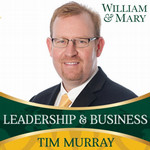 Communication is a critically important element of leadership. Even in small tightly-knit companies where everyone seems to be on the same page, it can be difficult to create a positive culture where quality communication is expected and practiced. Imagine being a CEO in a country and culture other than your own. Tim Murray knows all about that: born, raised, and educated in the United States, he is CEO of Aluminum Bahrain—also known as Alba—and is one of the top aluminum producers in the world. Murray joins us today to discuss his leadership experience at Alba, and what it's like to lead in a country and culture other than your own.