Mike Seiler
People don't need to come in. And if you don't need to come into work every day, why do you need to live that close every day? And so now we're talking about a spillover effect onto the transportation system. If people are going to work from home now, you're talking about redesigning residential space.
Female Voice
From William & Mary in Williamsburg, Virginia. This is Leadership & Business, produced by the William & Mary School of Business and its MBA program. Offered in four formats: the full-time, the part-time, the online, and executive MBA. For more information, visit wm.edu.
Ken White
Welcome to Leadership & Business, the podcast that brings you the latest and best thinking from today's business leaders from across the world. Sharing strategies, information, and insight that help you become a more effective leader, communicator, and professional. I'm your host, Ken White. Thanks for listening. Remember when working meant going to the office every day? Well, now countless offices all over the US and the world are empty or partially empty, thanks to remote work. It's been over three years since the start of the pandemic, and there's no doubt its lasting impact on commercial real estate has been significant, and no one's quite certain what the future holds for the office market. Mike Seiler is a professor at William & Mary's School of Business. In addition to teaching, he's one of the country's leading real estate researchers. He joins us on the podcast today to talk about the future of commercial real estate, as well as other real estate markets and what we might expect to see moving forward. Here's our conversation with Professor Mike Seiler of William & Mary's School of Business.
Ken White
Well, Mike, thanks for joining us. It's great to see you. I hope you're having a good summer so far.
Mike Seiler
Yeah, things have been going great. Anytime I have a chance to meet with you is always a good day.
Ken White
I appreciate that. Yeah, thanks. And it's nice to have you back on the podcast. So many people seem to be talking about what's happening with office space, commercial space. We're going to offices and seeing a lot of empty spaces. Not many people. Just how empty are offices across the country today?
Mike Seiler
Well, of course, that's going to vary city by city, but if you walk into New York City, for example, people are talking about a day of reckoning that's coming very quickly. So if you're wondering, you know how many people are coming into work, I mean, for some folks, it's once or twice a week, and the companies are trying to adjust as best they can. They're trying to do things like hot desking or what they call hoteling, where you don't put your personal effects on your desk anymore. You come in, and you know that you're going to be there on a Monday and Wednesday, and then I'm going to be there on a Tuesday, Thursday. And if we're going to need a conference room, maybe we keep that big space. But yeah, the individual personalized offices are going by the wayside because there's just not an expectation that people are going to come in five days a week anymore.
Ken White
Yeah. Boy, psychologically, people like their own office space.
Mike Seiler
It varies by person. So I think if you talk to older people, they absolutely want to come in five days a week. They want a picture of their wife and kids and their dog, and that's just how it's always been, and that's what they're used to. That's what they want. But if you talk to young people who graduated in the last couple of years, certainly during the COVID pandemic era, they just view things very differently. They're happy to never come into the office. The unemployment rate is super low right now. It's around 3.6%. And they just believe that they can do their job at a distance, and there's really no reason to come into work.
Ken White
Ever.
Mike Seiler
Frankly, some of them.
Ken White
Right. Which leads to so many other questions about culture and learning and so forth, and finding mentors and so forth. But on the real estate front, what effects of hybrid and virtual work had on the commercial space?
Mike Seiler
Well, I think, first of all, people have been leaning towards this, right? I mean, there are folks who, with exception before the pandemic, they would say, well, we really wanted to keep this person for family reasons. They needed to move to, let's say, Pittsburgh. So we set up a unique remote working opportunity for them. That was a truly rare situation before, but nowadays, that's expected. And so, if you think about companies, there were whisper mandates. So when the pandemic shut down, everyone had to leave. There was no discussion. You just got out of the office, and then the employers wanted you to come back. The employees didn't, mostly, but the employers wanted you to come back, and they were publicly saying you don't have to. It's voluntary. We kind of want you to experience our corporate culture by coming in. But a lot of people just didn't want to do that. But they didn't want to say they didn't want to do it, and companies didn't want to say, well, you have to come in. So there were what we refer to as whisper mandates, where they're saying, hey, look, we don't want to publicly come out and say you have to come in, but we'd really love it if you did come in. And so it was a little of a subtle back and forth, ongoing, and right now we're seeing that really hit because the pandemic has been declared as being over, and what are you going to do about it? Where are we going to settle? The pendulum has swung too far to the right, too far to the left. Where is it going to settle? Exactly? That is the big question.
Ken White
So if you and I own a massive company, we have all of these empty spaces and empty offices. What are some companies thinking about doing?
Mike Seiler
Well, what they would love to do is they would love to reduce that space. So there are a couple of things you can do. Whenever you don't have as many employees that are coming in, you can try to fit them in a smaller area. So let's say if I have one employee per 250 sqft. That's what you would typically do if you are fixed into a lease. So remember, an office lease might be seven to ten years. You can't just expand and contract that with the ongoings of your business or with the contraction or expansion of the economy. You have to make do with the space you have. So if I'm a firm and I'm looking to renew my office lease, so I'm about to expire, I'm looking to renew that. In most cases, I want to downsize. But let's say I just signed a lease, and I've got seven years left. I'm kind of stuck. And so that's where we're talking about being creative with your space. That's where we're thinking, well, can we possibly go to our landlord and say, hey, what if we occupied a smaller space? What if we had maybe employees on different floors of a building? Because when you expand, that's what happens. There's not always contiguous space that you can put people in. So maybe I want to take two floors of people and put them on one floor. Maybe I want to rotate. As we talked about earlier, folks come in into certain days. But if you have too much office space, which is the case for a lot of companies right now, you're kind of stuck. The difference is I guess a lot of these landlords are struggling. So in terms of who has the negotiation power, who has the upper hand, you can test that by having a conversation with your landlords. But that's always a great first step. Lay the cards on the table, tell folks what you want. And you never know what a solution could be. And if both parties have an interest in finding a solution, which I would certainly think that they would, who knows what can happen. But I definitely would have that conversation.
Ken White
Yeah. So it's not just the company signing the lease. It's the owner of the property. And boy, not a great position to be in these days.
Mike Seiler
Yeah, it's a terrible place. Great financial crisis. 2008, people saw office just get wrecked. Obviously, residential got wrecked even worse. But I have talked to many industry professionals, and a lot of experts say that office is headed for a massive just. I don't want to be too cataclysmic about it, but it's just not great, and there's really not a wonderful solution about it. There are a couple of things that folks are trying to do, but even those solutions are not great.
Ken White
Yeah. So many office buildings that are empty. What does that mean to cities?
Mike Seiler
Well, we've already seen that during the pandemic, people are moving to the suburbs. And if you are now talking about living in an urban dense area, people may be in a New York City or San Francisco, Los Angeles, Chicago, one of these more highly dense areas. It's definitely going to hurt the cities because people don't need to come in. And if you don't need to come into work every day, why do you need to live that close every day? And so now we're talking about a spillover effect onto the transportation system if people are going to work from home. Now you're talking about redesigning residential space. At my house, do I have a dedicated office? I mean, I have a space that I use, but now it feels like I need a dedicated office. And if you're a new home builder, you need to factor that into your designs when you're building homes for the future. And if you're selling existing real estate, you're thinking, wow, can I reimagine the space? Is there anything I can do to seal off this room? Because having the kids in the background, having a dog run by or bark or whatever, that was fine during the pandemic, but now we're kind of reaching that long-term solution and that's not as acceptable these days.
Ken White
Yeah, what does that now that you brought up the residential market? What's happening there?
Mike Seiler
Well, just a real quick combining of the two markets. So normally, we say in commercial real estate, obviously, location is unique, so no two cities are the same. We also say that returns and risk vary by property type. But there's been an idea now of blending residential and commercial. So you have all this extra office space, and they're trying to do residential conversions. Historically speaking, if you have a hotel, it's pretty easy to convert that to a residence. And so you'll see that happen quite often over time. People are trying to do that right now with office space. But if you imagine the floor plates of this so, imagine that you're in one of these major cities. The floor plate of an office property does not look like the floor plate of a high-rise apartment. They're just very different. For one thing, you don't have the same bathrooms. You don't have kitchens on every level. Right. And so to redo that, to regut a building, is a lot more work than people think. Laypeople just think on the surface, oh, well, it's a shell. Just redo what's on the inside of the shell. It's just not at all that easy. So while that's an idea on the table, that is not a great idea, but of the ideas that are available, it's higher up on the list than you would normally think. In a regular situation, you would discount that offhand and say, that's just a dumb idea. Why would you even suggest that? Well, because we're kind of out of great ideas.
Ken White
Yeah. Is it possible that we will have cities that just have a number of vacant buildings or vacant floors?
Mike Seiler
Well, in the short run, unfortunately, yes. In the long run. See, that's the problem with anything that disrupts our structure. If there is a short-term change, it's very, very hard to deal with. We love stability. I mean, if you think about all of our governmental policies, they're all based on stability. We can deal with gradual change. What's really tough is when you have what's called a structural break that just throws everyone for a loop. It hurts returns. It increases volatility. It's really not good for anybody.
Ken White
We'll continue our discussion with Professor Mike Seiler in just a minute. Our podcast is brought to you by the William & Mary School of Business. This year the Financial Times, Princeton Review, US News & World Report, and CEO Magazine have all named the William & Mary MBA program one of the best in the US and the world. If you're thinking about pursuing an MBA, consider one that has outstanding faculty, excellent student support, and a brand that's highly respected, the William & Mary MBA program. Reach out to our admissions team to learn which of our four MBA programs best fits you the full-time, the part-time, the online, and the executive. Check out the MBA program at William & Mary at wm.edu. Now back to our conversation with Professor Mike Seiler.
Ken White
How about the retail market? What are some of the changes that you're noticing in terms of retail space?
Mike Seiler
Well, in terms of retail, we had already pre-pandemic seen a move towards online, right? I mean, people are shopping online and so forth. The pandemic accelerated what was already trending that way. And the question now becomes, how will people shop in the future? And one of the disturbing trends that we see just from an overall economic well-being and also from an environmental carbon footprint of leaving topic. A lot of people, now that they're used to buying online, they're going to buy, let's say, four different colors of the same shirt or maybe two or three different sizes of it because people complain these pants are not quite fitting the way they normally do. Or this shirt, this company calls it a large. To me, I felt like a medium. And so they understand this frustration. So a lot of people are just ordering too many items of, of the same, and then they're going to try it on at home, and they're going to ship those things back. And that is terrible for the environment, as you might guess, right? Between the boxing and the shipping and the gas and all the people who have to do that, it's just an incredibly inefficient system, and it's not really receiving that much discussion right now. But there's going to come a time when people recognize that and are going to be fed up with it and put a stop to it.
Ken White
Now is that the industrial market? I've heard you use that term. What is the industrial market?
Mike Seiler
Industrial real estate is the delivery of products from one place to another. And that can be very inclusive. Let's say that a container ship is filled in China, and that's going to come here to Los Angeles. And you might have remembered that during the crisis, a lot of these ships would back up into the port. I mean, they would just be literally anchored out in the port for a month waiting because we didn't have truck drivers. Remember, there was a labor shortage going on. And so, one single disruptor tends to spill over into many other areas. More recently, instead of these ships trying to get into the West Coast ports, they're coming all the way through and docking on the East Coast, that's caused an increase in demand there, and we don't have the supply to meet it. So there's now discussion of what about inland ports. So maybe we're going to build this industrial space where you want a port that's by a railroad or major interstate or some type of transportation. But the modality is going to change. Also, you can't just build a port inland and think, oh, let's just build it 50 miles inland. We'll railroad these 20-foot containers a little bit further inland, and then we'll be good. Okay, well, do you have a labor force that's going to be able to deal with it once you get there? Do you have the truck drivers in order to take that across the country? Do you have interstates that intersect? Because not everything goes to one place. It goes in all different directions. These are things that the industry is now trying to work on that we just didn't have to think about in the short run. Yeah, let's consider the long term of all these, but we just did not have to deal with that in a short period of time. So it's really causing everyone to put on their thinking caps and be creative.
Ken White
And there's no quick solution either.
Mike Seiler
There's no quick solution. And one of the other problems is they say, well, you have a need for cold storage or what we call last mile delivery. That means that I want things really close to where the population is. Because when people order something on, let's say, Amazon, they don't want it in a week. They want it tomorrow. And at some point, they're going to say, why can't I have it right now? And there's even a comedian who jokes about Amazon precog. We want you to send me stuff before I even order it because I don't know I want it yet. But you should know because you guys have all these algorithms, and you're so smart. But let's say that this last mile storage, we want it delivered in a very short period of time. But it's not like there's a warehouse in your urban center. So right now, the industrial space is trying to find either vacant land or property that can be converted into industrial warehouse so that these items can be shipped to you, and then when you order them, they're at your door the next day, or possibly even the same day. Of course, there's also the drone delivery, which is problematic for apartment buildings. It's great if I have a yard. You can fly something and drop it on my front porch. But what if I live in an apartment on the twelfth floor? How are you going to get that to me? And there are a lot of concerns about flying objects and what happens when they crash, or they have malfunctions. Of course, this is what happens to vehicles in real life. But these are all questions that are being answered now as quickly as humanly possible.
Ken White
When you look at real estate, commercial and residential, where do you see things? What are the major changes we'll see in, say, two, three, four, or five years from now?
Mike Seiler
Well, on the commercial side, it's really all the property types that we've talked about, right? I mean, industrial has been red hot for quite some time. Office, we know there's going to be a contraction. What type of net absorption are we going to have? I mean, they're already slowing down the delivery of this. But if you think about delivering major commercial properties, you don't just decide you're going to build them, and then they're ready tomorrow. These things need permitting, zoning, the requirement of a lot of people getting together to work together. And so these wheels are put in motion many years in advance and then just the mere construction of it alone. We have constraints on our labor markets and on materials that go into these things. And so there's natural delays. It takes quite a long time to build things. If one ever questions that, then I would encourage you to drive with me over the HRVT as I come in this morning, and you see a bridge that's been being built for many, many years and will continue to go on for years. So these are things that we know we are in a post-pandemic era. However, this is not the only outbreak that we've had over the years. This is maybe the worst one. This is one that affected everyone on a global basis, whereas the others in previous years had threatened to do that. But we would be foolish to believe that this is the end of it and we'll never have another one. I think this was our shot across the bow. Maybe a little bit of a direct hit, you might argue. But there's no reason to believe this won't continue to happen again as we continue to cut into our rainforest and force animals that we did not interact with in the past. Now we have human interaction with them, and so forth. So I view that whatever we're looking at right now as something that we really need to wrap our arms around, not because it is a need today, but because it's absolutely going to be a need in the future.
Ken White
That's our conversation with Mike Seiler. And that's it for this episode of Leadership & Business. Our podcast is brought to you by the William & Mary School of Business, home of the MBA program, offered in four formats the full-time, the part-time, the online, and the executive MBA. Check out the William & Mary MBA program at wm.edu. Thanks to our guest, Professor Mike Seiler, and thanks to you for joining us. I'm Ken White, wishing you a safe, happy, and productive week ahead.
Female Voice
We'd like to hear from you regarding the podcast. We invite you to share your ideas, questions, and thoughts with us by emailing us at podcast@wm.edu. Thanks for listening to Leadership & Business.



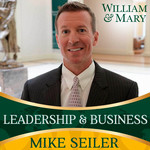 Remember when working meant going to the office everyday? Now, countless offices all over the US and the world are empty, or partially empty, thanks to remote work. It's been over three years since the start of the pandemic, and there's no doubt its lasting impact on commercial real estate has been significant. And no one's quite certain what the future holds for the office market. Mike Seiler is a professor at William & Mary's School of Business. In addition to teaching, he's one of the country's leading real estate researchers. He joins us today to talk about the future of commercial real estate, as well as other real estate markets, and what we might expect to see moving forward.